
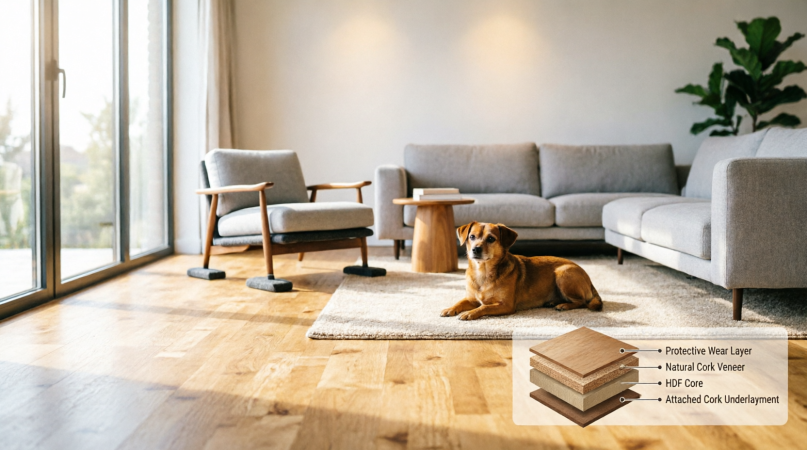
If you are looking for a floor that feels warm under bare feet and quietly absorbs the sound of footsteps, cork is a fantastic option. However, it is not a magic bullet. Cork flooring is a great choice for homeowners who want a soft, quiet, and eco-friendly surface, provided they can accept that it will dent and scratch more easily than hardwood or tile. It is a poor fit for rooms with regular standing water, intense direct sunlight, or heavy, unpadded furniture.
Ultimately, the specific product you choose matters just as much as the material itself, because cork floors are built in very different ways. This guide breaks down the real advantages and drawbacks, how it handles water, dogs, and kids, what it costs, and exactly what you need to know before making a purchase.
In This Guide
- What cork flooring actually is
- Cork flooring pros and cons at a glance
- Deep dive: Advantages and disadvantages
- Is cork flooring truly waterproof?
- Are cork floors good for dogs and small children?
- How to clean and maintain cork flooring
- Types of cork flooring and what goes underneath
- Recommended thickness and expected lifespan
- Cost breakdown: Is it cheaper than wood?
- Cork vs. bamboo, hardwood, and vinyl
- Health and safety: Is it the healthiest choice?
- Frequently Asked Questions
What Is Cork Flooring?
Cork flooring is crafted from the bark of the cork oak tree (Quercus suber). Harvesters strip the bark entirely by hand, meaning the tree is never cut down. The bark naturally regrows, and a tree is first harvested at around 25 years of age. After that, it can supply cork roughly every nine years. Interestingly, the first two harvests produce lower-grade cork, which is commonly repurposed into composite products like flooring, while later, finer harvests are reserved for wine stoppers.
The harvested bark is ground, compressed with a binder, and baked into blocks. These blocks are then sliced into sheets that become the surface of your tiles or planks. Generally, you will find cork flooring sold in three main constructions:
- Solid cork tiles: Made of cork all the way through, typically requiring a glue-down installation.
- Engineered floating planks: A thin cork wear layer on top of a core (often high-density fiberboard, or HDF), featuring a click-lock edge for easy installation.
- Hybrid planks: A cork surface layer combined with a vinyl or rigid waterproof core, offering the best of both worlds.
Note: Do not confuse flooring with cork underlayment. Underlayment is a cushioning layer designed to sit beneath another floor type and is not meant to be walked on directly. Also, while cork harvesting is renewable, a finished floor still involves adhesives, backing boards, and manufacturing. A “cork” label does not automatically mean the entire product is 100% natural or low-impact.
Cork Flooring Pros and Cons at a Glance
| Advantages | Disadvantages |
|---|---|
| Soft and springy underfoot | Dents under heavy, narrow point loads |
| Feels naturally warmer than tile or stone | Scratches easily from grit and pet claws |
| Excellent at absorbing impact noise | Fades or discolors in strong direct sunlight |
| Distinctive, organic natural look | Water damage risk at seams and in the core |
| Made from a renewable raw material | Surface finish may eventually need recoating |
| Easy, manageable routine cleaning | Installation rules vary heavily by product |
For most buyers, the deciding factors come down to denting, moisture, and sunlight. The rest are mostly comfort bonuses or minor upkeep considerations.
Advantages of Cork Flooring
Comfortable Underfoot
Cork is made of millions of tiny, air-filled cells. When you step on it, it compresses slightly and then bounces back. Many people find it significantly less tiring than tile or stone when standing for long stretches, such as at a kitchen counter. (Note: This is a comfort feature, not a medical cure for joint or back pain).
Natural Warmth
Cork conducts heat poorly compared to ceramic tile or stone, meaning it feels much less cold on bare feet in the winter. Floating cork floors can also be installed over radiant heating systems, provided the manufacturer approves it. Many brands cap the subfloor surface temperature at around 82°F (28°C) to protect the material.
Sound Absorption
Cork is a natural sound dampener. It helps reduce footstep and impact noise, and many planks come with a cork underlayer already attached. Keep in mind that how quiet the room actually is depends on the entire assembly: subfloor, underlayment, and installation quality. It reduces noise, but it is not completely soundproof.
Natural Appearance
Natural cork has a unique, speckled, organic look with shades that vary subtly from plank to plank. Manufacturers also offer wood-look and patterned versions. Because color ranges vary by brand, always order physical samples and view them in your home’s actual lighting.
Renewable Raw Material
Because the bark regrows, cork can be harvested repeatedly from the same tree for over 150 years. This makes the raw material highly sustainable, even if the final manufactured product has a larger footprint.
Disadvantages of Cork Flooring
Dents and Scratches
This is the most frequent complaint. Cork is inherently softer than hardwood, tile, or most luxury vinyl. Heavy furniture with narrow legs, high heels, dropped objects, and grit tracked in on shoes can all leave marks. Pet claws can also scratch the finish. Practical fix: Use wide felt furniture pads, lift furniture instead of dragging it, place mats at entrances, and spread heavy loads with area rugs.
Moisture Vulnerability
Cork is often marketed as water-resistant, but that does not make every cork floor waterproof. Water that seeps into seams, edges, or a fiberboard core can cause swelling and permanent damage. Moisture rising from a concrete slab is also a major risk, which is why most manufacturers strictly require a vapor or moisture barrier.
Sunlight Fading
Direct, prolonged sun exposure can lighten or shift the color of cork. A UV-protective finish can slow this down but may not stop it entirely. Using curtains, window film, and occasionally moving rugs and furniture will help the floor age evenly.
Finish Maintenance
The protective topcoat takes the brunt of daily wear, so it is the part that eventually shows its age. Depending on the product, you may only need regular cleaning, or you may need to recoat the finish after several years. Always follow the manufacturer’s specific schedule. Some solid cork products can be sanded and refinished; many engineered floating planks cannot, simply because the top cork layer is too thin.
Wet and High-Traffic Areas
Cork is not automatically banned from kitchens, bathrooms, or entryways, but each product has its own approved uses. You must check the written installation guide and warranty for the specific room you have in mind. Basements require particular care due to slab moisture.
Is Cork Flooring Waterproof?
Not by default. Most traditional cork floors are water-resistant at best, meaning they can handle a spilled glass of water if you wipe it up quickly. This is entirely different from a floor that tolerates standing water, flooding, or constant high humidity.
Performance depends on four factors:
- Surface finish: Resists spills but can wear through over time.
- Seams and joints: Water will seek out and enter these gaps first.
- Core and backing: An HDF core will swell and buckle if soaked.
- Subfloor moisture: Slab moisture can damage the floor from below if not properly blocked.
Some modern products are built differently. For instance, certain hybrid lines (like Wicanders’ Hydrocork) feature a multilayer construction with a waterproof cork middle layer and vinyl components. This is a hybrid product, not a traditional cork plank. Always read the manufacturer’s instructions and warranty before installing cork in a kitchen, bathroom, laundry room, or basement.
Are Cork Floors Good for Dogs and Small Children?
They can work beautifully, but with clear trade-offs.
For children: Cork’s cushioning and noise reduction are massive benefits in play areas and bedrooms. The main drawbacks are dents from dropped toys and furniture, and spills that must be wiped up promptly to prevent seepage.
For dogs: The soft, warm surface is very comfortable for pets to lie on. However, dog nails can scratch the finish, and accidents that soak into the seams can cause irreversible core damage. If you choose cork, keep your dog’s nails trimmed, wipe up messes immediately, use rugs in high-traffic running areas, and choose a product with a durable, high-quality factory finish. If your dog is large, highly active, or prone to accidents, a harder, fully waterproof floor (like luxury vinyl) may be the more practical choice.
How to Clean and Maintain Cork Flooring
- Regular cleaning: Sweep or vacuum with a soft floor attachment to remove grit, which is the primary culprit behind scratches. Use a microfiber dust mop for daily upkeep.
- Spills: Wipe them up right away. Do not let liquids sit.
- Periodic cleaning: Use a lightly damp (not wet) mop with a cleaner specifically approved by the flooring manufacturer.
- What to avoid: Never use steam mops, soaking wet mops, abrasive scrubbing pads, or harsh chemicals like ammonia or bleach.
- Long-term protection: Put felt pads under all furniture, use entry mats to trap dirt, limit prolonged direct sun with blinds, and inspect the finish periodically for worn spots. Recoat or reseal only as the manufacturer directs for your specific product.
Types of Cork Flooring
| Type | Installation Method | Key Points |
|---|---|---|
| Glue-down tiles | Adhesive onto a prepared subfloor | Requires a perfectly flat, clean, dry subfloor. Seams matter. Some can be refinished. |
| Floating planks | Click-lock, not fixed to subfloor | Easier DIY installation. Must check core type, expansion gap, and moisture barrier rules. |
| Engineered cork | Layered construction, often floating | The backing and core control moisture resistance and repair options. |
| Decorative/printed | Varies | Looks vary widely. Do not assume they perform the same as natural, solid cork. |
Product details differ enough that these formats are not interchangeable. For example, a 4mm glue-down tile might have a 3.2mm solid cork base, while a 10.5mm floating plank might only have a 0.8mm cork veneer over an HDF core. Always confirm current specifications on the manufacturer’s site.
What Goes Under Cork Flooring?
It depends entirely on the product, so following the installation guide is non-negotiable. General principles include:
- The subfloor must be clean, flat, dry, and structurally sound.
- Concrete subfloors usually require a moisture test and a dedicated moisture barrier (e.g., a polyethylene film at least 0.2 mm thick).
- Some planks already have an underlayment attached. If so, adding an extra unapproved layer can actually affect stability and void your warranty.
- In multi-unit buildings, acoustic requirements may call for a specific, certified underlayment.
Recommended Thickness for Cork Flooring
There is no single “best” thickness, as it depends on the construction type:
- Glue-down solid or veneer tile: ~4 mm (Thin; relies heavily on a perfect subfloor).
- Floating HDF-core plank: ~10.5 mm (Includes attached underlayment for stability).
- Hybrid vinyl and cork plank: ~6 mm (Different, rigid core construction).
Remember, total thickness is not the same as durability. The wear layer thickness, the density of the cork, the quality of the finish, and the core material all matter far more than the total millimeter count. Also, consider how a new floor height will meet your doors, cabinets, and adjoining rooms.
What Is the Lifespan of Cork Flooring?
Published estimates vary widely, ranging from about 15 to 20 years with poor care, up to 30 to 40+ years with excellent maintenance. Treat those as rough, non-manufacturer estimates. Manufacturer warranties are a much more concrete benchmark: some premium floating lines list a 15-year residential warranty, while specific hybrid lines may offer a lifetime residential warranty.
Keep three timelines separate: the life of the floor material itself, the life of the surface finish, and the time until recoating or repair is needed. Traffic, sun exposure, moisture, pets, and upkeep affect all three. Not every cork floor can be sanded and refinished.
Cork Flooring Cost: Is It Cheaper Than Wood?
Cork is not reliably cheaper or more expensive than hardwood. It depends entirely on the products chosen and the scope of the job.
As a rough 2026 US planning range (not a formal quote):
- Installed, total: About $4.50 to $13.50 per square foot, including labor and materials.
- Materials and labor split: $5 to $10 per square foot for materials, with professional installation adding $2 to $4 per square foot.
- Hardwood comparison: Often cited at roughly $6 to $25+ per square foot (material and labor), meaning the price ranges heavily overlap.
Example: A 200 sq. ft. room at $4.50 to $13.50 installed will cost about $900 to $2,700.
Extras that raise the bill: Subfloor repair or leveling, moisture barriers, trim and transitions, removing old flooring, extra material for cuts and waste (typically 5% to 10%, more for complex tile patterns), and eventual recoating. Always get local, written quotes.
Cork vs. Bamboo Flooring: Which Is Better?
Neither wins universally; both vary drastically by construction and finish.
- Comfort: Cork is softer and more cushioned. Bamboo is firmer.
- Dent resistance: Cork is lower. Bamboo is often higher, especially dense strand-woven types.
- Moisture: Both are water-resistant at best; neither is inherently waterproof unless specifically engineered to be.
- Appearance: Cork offers a natural speckled or printed look. Bamboo offers a wood-like grain.
- Verdict: Choose cork if comfort, warmth, and quiet matter most. Choose bamboo if dent resistance and a traditional wood look are your top priorities.
Cork Flooring vs. Hardwood and Vinyl
- Hardwood: Resists dents better and can often be sanded and refinished several times. Cork is softer, quieter, and warmer. Both dislike standing water and can fade in the sun.
- Vinyl: Many luxury vinyl products are explicitly designed for wet areas and resist scratches and moisture better than most cork floors. Cork offers superior cushioning and a natural aesthetic. If water exposure is a major concern, vinyl (or a cork hybrid explicitly rated for it) is the safer pick.
Is Cork Flooring a Healthy Choice for a Home?
Cork is not inherently the “healthiest” flooring on the market. Indoor air quality depends heavily on the adhesives, finishes, binders, your cleaning habits, and the specific product.
Look for independent, third-party emissions certifications such as GREENGUARD Gold or FloorScore rather than broad, unverified marketing claims. For example, several major manufacturers have highlighted water-based, solvent-free binders and achieved GREENGUARD certification for specific lines. Certification is product-specific, so always verify the exact line you are buying. Treat claims like “hypoallergenic” or “antimicrobial” with caution unless backed by documentation for that specific product.
Is Cork Safer Than Plastic?
“Safer” can mean several things: indoor emissions, material composition, environmental impact, or slip resistance. You must compare specific products and their certifications, not the two materials as broad categories. A certified low-emission luxury vinyl plank and an uncertified cork floor installed with a high-VOC adhesive are not a fair comparison. Always ask the manufacturer for emissions test results and installation adhesive data.
Frequently Asked Questions
What are the biggest disadvantages of cork flooring?
Dents, scratches, sunlight fading, and moisture damage. Finish upkeep and product-specific installation rules also add effort.
Is cork flooring waterproof?
Usually no. Most cork floors are water-resistant at best. Only certain hybrid constructions are designed for heavier moisture, so always check the manufacturer’s documentation.
How long does cork flooring last?
Estimates range from 15 to 40 years depending on the product, wear, and upkeep. Manufacturer warranties vary from 15 years to lifetime, depending on the specific line.
Are cork floors good for dogs?
They are comfortable and quiet, but dog nails can scratch the finish and accidents can reach the seams. Trim nails, clean messes fast, and consider a harder, waterproof floor for large or very active dogs.
Are cork floors suitable for small children?
Yes, thanks to excellent cushioning and noise reduction. However, expect dents from toys and furniture, and wipe spills promptly.
How do you clean and maintain cork flooring?
Sweep or vacuum regularly, use a lightly damp mop with an approved cleaner, avoid steam and soaking, use felt pads, and recoat only as the manufacturer directs.
Is cork flooring cheaper than hardwood?
Not always. Price ranges overlap significantly, so compare similar products and total installed costs rather than assuming one is universally cheaper.
What goes under cork flooring?
It depends on the product. Many floating floors need a moisture barrier over concrete, and some include attached underlayment. Always follow the manufacturer’s instructions.
What thickness of cork flooring is best?
There is no single best thickness. Tiles, floating planks, and hybrids differ in construction. Judge a product by its wear layer, density, and approved use, not just total thickness.
Is cork flooring suitable for kitchens or bathrooms?
Often yes for kitchens, if the product is approved and spills are wiped up quickly. For bathrooms, only install it if the specific product is explicitly approved for wet areas. Many standard cork floors are not suited for bathrooms.
Does cork flooring fade in sunlight?
It can. UV-protective finishes help but may not eliminate fading entirely. Manage sun exposure with window coverings and by periodically moving rugs.
Conclusion: Is Cork Flooring Worth It?
Cork is absolutely worth considering if you value comfort, warmth, quiet, and a natural aesthetic, and you are willing to protect it from heavy point loads, strong sun, and standing water. It is a weaker choice for flood-prone rooms, homes with large active dogs, or anyone who wants a floor that requires almost zero care.
Your best next step: pick two or three specific products, request physical samples, and read each manufacturer’s installation guide and warranty for the exact room you plan to use. That practical step will tell you far more than any generic pros and cons list ever could.