
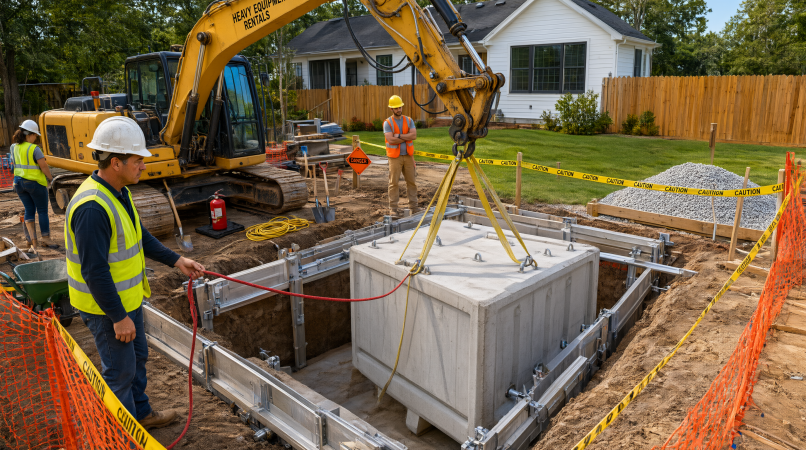
Septic replacement is a significant investment, and a single price rarely fits every home. According to the Environmental Protection Agency (EPA), repairing or replacing a malfunctioning conventional system typically costs between $5,000 and $15,000, with alternative systems often costing even more. Contractor-focused industry reports frequently cite higher totals for complete, complex installations.
The primary reason for this wide price spread is project scope. Replacing a single tank, installing a new drain field, and replacing an entire system are three entirely different projects. This guide breaks down exactly what drives the price, how to determine if you need a full replacement, and how to compare contractor quotes fairly.
How Much Does Septic Replacement Cost?
Short answer: Many conventional replacements fall roughly between $5,000 and $15,000. Replacing the tank alone often costs less, while a complete system overhaul—including a new drain field, soil testing, and engineering—can cost more. Alternative systems, such as mound or aerobic units, usually carry a higher price tag.
Published cost numbers differ because industry sources measure different scopes of work and publish their data on different timelines. Because national cost datasets vary significantly based on project specifics, the table below breaks down figures by their specific sources rather than relying on a potentially misleading blended average.
Septic Replacement Cost by Scope
| Scope | Published Figure | Source and Notes |
|---|---|---|
| Any conventional repair or replacement | $5,000 to $15,000 | EPA general range (scope not itemized). |
| New concrete tank, installed | $3,000 to $6,000 | BuildingAdvisor reports typical installed costs. |
| Tank replacement, average | ~$7,350 | Angi lists this as the average, within a very wide range. |
| Tank plus drain field | $2,000 to $20,000 (Avg. ~$6,000) | Angi figures reported by Bob Vila (Dec 2023). |
| Complete new conventional system | Can exceed $15,000 | BuildingAdvisor notes complex systems easily exceed this. |
| One county’s average for a failed system | ~$12,000 | Jefferson County SWCD (includes permits, soils evaluation, engineering, and replacement). |
| Alternative system | Roughly double a conventional one | BuildingAdvisor notes alternative systems can cost twice as much. |
Note: The Angi tank average and the combined tank-plus-field average overlap awkwardly. This is a clear sign that the underlying jobs differ in scope, which is why you must compare scope before comparing price.
Currently, there is no trustworthy, standalone national figure for a drain-field-only replacement. Consumer cost guides generally place it in the thousands to low five figures, driven heavily by field size, soil conditions, and design. Always get a site-specific quote.
What a Replacement Estimate Should Include
Check every quote to ensure it explicitly covers these items:
- Site and soil evaluation, and engineering design if required.
- Permit and local inspection fees.
- Excavation, tank delivery, and pipe connections.
- Drain field or other effluent dispersal components.
- Pumping, removal, or proper abandonment of the old tank.
- Pumps, alarms, and electrical work (if the system design requires them).
- Backfill, grading, and lawn or landscape restoration.
If a quote leaves out any of these line items, ask the contractor who is responsible for paying for it and what the likely out-of-pocket cost will be.
Septic Tank Replacement vs. Full System Replacement
How much does it cost to replace a septic tank?
A tank-only job makes sense when the tank itself has failed but the drain field is still functioning perfectly. Published installed figures range from about $3,000 to $6,000 for a concrete tank, up to an average near $7,350, with large swings based on location, tank size, and site access. Buying the tank itself costs far less than installing it, so do not mistake a retailer’s price tag for the total project cost.
How much does it cost to replace an entire septic system?
A full replacement covers the tank, distribution components, drain field, design, testing, and site restoration. Use the EPA’s $5,000 to $15,000 range as a baseline for conventional systems, and expect totals to climb higher for difficult sites or advanced alternative designs.
Can you replace just a leach field?
Sometimes. Replacing only the drain field can work when the tank is structurally sound, the failure is limited to the field, and local regulations allow it. Even then, expect extra steps. Many municipalities require a new percolation test and deep-hole test before issuing a permit to replace a leach field. The original location may no longer meet current code, meaning a new location, a revised design, or an alternative system may be required.
What Affects Septic Replacement Costs?
Some costs apply to almost every project: permits, excavation, the treatment unit, and site restoration. Others depend entirely on your specific property.
| Factor | Why It Matters | Primary Cost Impact |
|---|---|---|
| Tank size and material | Bedroom count and local code set minimum capacity; material changes price and handling. | Tank |
| Drain field size and design | Larger or more complex fields require more excavation, piping, and materials. | Field |
| Soil and percolation | Poor soil can require larger fields, engineered mounds, or advanced treatment units. | Design, whole project |
| High groundwater or shallow bedrock | Often rules out conventional trench systems entirely. | Design, system type |
| Slope and access | Limited equipment access slows down work and may require specialized machinery. | Labor |
| Existing structures and landscaping | Driveways, patios, and mature trees must be carefully worked around or restored. | Labor, restoration |
| Old system removal | Pumping and proper abandonment or physical removal of the old tank adds time and disposal fees. | Tank |
| Permits, testing, engineering | Fees and required evaluations vary wildly by jurisdiction. | All |
| Pumps, alarms, and electrical | Required for pressure-dosed, mound, drip, and aerobic systems. | Equipment |
| Surprises found during digging | Unexpected bedrock, buried debris, or high water may add significant work. | Whole project |
Signs Your Septic System May Need Replacement
The EPA’s homebuyer guidance lists several critical warning signs, including a strong sewage odor around the tank or drainfield, and bright green, spongy grass growing specifically over the drainfield. The EPA also highlights standing water or damp spots near the tank, with sewage backing up into the home being the most urgent sign of all.
Other common indicators include:
- Slow drains or gurgling sounds across several fixtures, not just one.
- Alarms sounding or pump failures on systems that utilize mechanical components.
- Wastewater visibly surfacing in the yard.
- Repeated system failures shortly after repairs or pumping.
None of these signs alone proves the entire system must be replaced. A failed baffle, a clogged distribution line, or a severely overfull tank can mimic the symptoms of a failed drain field. A qualified septic professional should inspect the tank, review your pumping history, and evaluate the field before you make a decision.
Safety Warning: Stay away from surfacing sewage and never enter a septic tank. Dangerous gases (like hydrogen sulfide) and low oxygen levels can be fatal within moments. Michigan State University Extension explicitly warns homeowners to never enter a septic tank. If sewage is backing up or surfacing, call a qualified professional promptly and follow local public health guidance.
Repair or Replace: Which Option Makes Sense?
| Situation | What May Be Enough | What to Confirm |
|---|---|---|
| Damaged or missing lid | Replace the lid or install a riser. | Correct size, load rating, and secure, watertight fit. |
| Damaged baffle or filter | Repair or replace the specific part. | Professional assessment of the tank’s interior. |
| Failed pump or float | Replace the mechanical component. | Whether controls or wiring are also failing. |
| Cracked or collapsed tank | Replace the tank. | Local requirements and the current condition of the drain field. |
| Failed drain field | New field or alternative design. | Soil testing, available space, and regulatory approvals. |
| Repeated failures | Diagnose the root cause first. | Check for overloading, solids carryover, or groundwater intrusion. |
| No longer compliant | Approved replacement design. | What the local health authority specifically requires. |
Crucial reminder: A new tank will not fix a failed drain field. Always ask for the concrete evidence behind a full replacement recommendation before you agree to it.
How to Replace a Septic Tank: The Professional Process
Replacement is strictly a job for professionals. It involves heavy excavation, hazardous sewage handling, confined-space risks, and strict permitting. Here is what the process looks like from a homeowner’s perspective:
- Diagnose the failure: Inspecting the tank, evaluating the drain field, and assessing the overall system are separate, specialized tasks.
- Review records and local rules: Gather existing permits, property drawings, property lines, setback requirements, and well locations.
- Evaluate the site: Soil composition, groundwater levels, available space, and design needs determine what can legally be built.
- Choose the scope: The diagnosis dictates whether the job is a simple component repair, a tank swap, a field replacement, or a full system overhaul.
- Obtain approvals: Requirements vary by jurisdiction. Confirm them with your local health or environmental authority before any digging begins.
- Hire licensed professionals: Most states require septic installers to be specifically licensed. The contractor coordinates excavation, old tank abandonment, new installation, connections, and electrical work.
- Inspect and restore: Expect mandatory inspections, proper backfilling, site restoration, and finalized paperwork for your property records.
- Follow the maintenance plan: Adhere to the designer’s and manufacturer’s instructions, as well as local pumping requirements.
Septic System Replacement Options
The EPA notes that its list of common septic types is not all-inclusive, but these are the most relevant when replacing an existing system:
| System Type | How It Works | When It May Be Used | Main Considerations |
|---|---|---|---|
| Conventional | Tank plus a gravity or pump-fed trench drain field. | Suitable soil and adequate space. | Typically the lowest-cost option. |
| Chamber | Gravelless variation on the traditional trench field. | Alternative to a stone-and-pipe trench. | Needs local regulatory approval. |
| Mound | Constructed sand mound holds the drain field above natural soil. | Shallow soil, high groundwater, or shallow bedrock. | Usually requires a pump and electricity. |
| Recirculating Sand Filter | Effluent is pumped through a sand filter for treatment. | Limited soil depth or space. | Requires pumps, controls, and periodic service. |
| Drip Distribution | Small tubes distribute effluent in the top 6 to 12 inches of soil. | No large mound needed; good for tight spaces. | Requires a dosing tank and electricity. |
| Aerobic Treatment Unit (ATU) | Adds oxygen to the tank for additional, advanced treatment. | Poor soil or strict environmental discharge rules. | Requires electricity and regular, scheduled service. |
Cost evidence for advanced systems is limited, but industry estimates place conventional systems at $3,000 to $8,000, while drip systems range from $8,000 to $18,000. Mound and aerobic systems are consistently ranked among the most expensive. Treat these as general indicators, not binding quotes.
No property can use every system. Soil, groundwater, lot size, and local approval dictate what is allowed. If you are weighing options, ask your contractor exactly why a conventional system is or is not possible on your specific lot.
Alternatives to a Traditional Septic System
If a public sewer line is available, connecting to it may be an option, though connection and trenching costs vary wildly by municipality. Among onsite options, conventional and chamber systems are generally the lowest cost where the site allows them. Composting toilets and holding tanks do not replace the full, long-term function of a household septic system. Always compare the total cost of ownership—including electricity, pumping, and required service—not just the upfront installation price.
How Often Does a Septic System Need Replacement?
There is no single expiration date. The EPA’s homebuyer guide gives an average lifespan of 15 to 40 years, with systems lasting longer if properly maintained. However, components age at different rates:
- Tank: Concrete tanks can last many decades. Steel tanks are highly prone to rust and may need replacement after just 15 to 20 years.
- Drain field: A well-maintained field can last 20 to 30 years, but overloading and neglect drastically shorten that lifespan.
- Pumps and controls: Mechanical parts follow a standard equipment replacement schedule, commonly cited at 10 to 20 years.
Age alone does not mean replacement is due. Design, installation quality, pumping habits, household water use, soil, and groundwater all play a massive role. Routine maintenance helps protect a working system, but it cannot guarantee an aging, poorly designed one will not eventually fail.
Septic Tank Lid Replacement: When Is It Enough?
A cracked, broken, or missing lid is a severe safety hazard and a direct path for odors and surface water to enter the tank. Replacing it is a much smaller, more affordable job than replacing the entire tank.
A correct lid must match the opening size, carry the required vehicular or pedestrian load rating, and seal securely. Retail plastic covers from major brands typically cost around $65 to $80 at national hardware retailers. Keep in mind that this is the price of the part, not the installation.
If the lid is buried deep, or if the concrete tank top itself is damaged, have a professional assess it immediately. A sagging or cracked tank top can indicate the tank structure itself is failing. Never lean into an opening, and never attempt to improvise a cover.
How to Choose a Septic Replacement Contractor Near You
Local rules and soil conditions vary dramatically, so national advice only goes so far. When searching for a “septic replacement near me,” look for:
- The specific state or local license, certification, or registration your jurisdiction requires.
- Proven experience with your specific system type.
- Deep familiarity with local permit processes and health department inspections.
- Solid insurance, verifiable references, and a portfolio of past projects.
- Written, itemized estimates from multiple contractors whenever practical.
- Clear warranty and service terms, especially for pumps and advanced treatment units.
Questions to Ask Every Contractor
| Question | Why It Matters |
|---|---|
| What specific evidence shows replacement is needed? | Separates a real, data-backed diagnosis from a generic sales pitch. |
| Can the existing tank or drain field stay? | A partial replacement may cost far less than a full teardown. |
| What testing and approvals are required? | Directly affects your project timeline and total cost. |
| What exactly does this estimate include? | Prevents surprise add-ons and hidden fees later. |
| How will the old system be handled? | Removal and legal abandonment are separate, regulated costs. |
| Who pulls permits and schedules inspections? | Ensures there are no compliance gaps or legal liabilities for you. |
| What site conditions could raise the price? | Reveals the risk of encountering bedrock, high water, or failed lines. |
| What maintenance and warranties apply? | Especially critical for alternative systems with mechanical parts. |
Worked Example: Comparing Two Quotes
This is an illustrative example, not real market data. Two contractors quote the same house:
| Line Item | Quote A (Tank Only) | Quote B (Full Conventional) |
|---|---|---|
| Soil evaluation and design | $0 | $1,500 |
| Permit and inspection | $300 | $500 |
| Tank (1,000 gallon) | $3,200 | $3,200 |
| Excavation and installation | $2,000 | $2,000 |
| Drain field | $0 | $6,000 |
| Old tank pumping and abandonment | $800 | $800 |
| Restoration | $600 | $1,000 |
| Total | $6,900 | $15,000 |
The $8,100 gap equals the design fee ($1,500), higher permit cost ($200), the new drain field ($6,000), and extra site restoration ($400). Quote B is not inherently “more expensive” in a like-for-like sense; it simply covers significantly more work. Before comparing prices, always ask Contractor A whether the existing field has been tested and whether it will still be approved by the local authority.
Can Septic Treatment Products Fix a Failing System?
No product can rebuild a collapsed tank, repair broken underground pipes, or restore a biologically clogged drain field. Additives are marketed for routine maintenance, not structural repair.
The EPA does not endorse individual septic products. University extension guidance generally treats commercial additives as unnecessary, since a normal household’s daily flow already supplies plenty of natural bacteria to break down waste. There is a lack of independent, peer-reviewed testing to support marketing claims about the “strongest” or “best” treatment tablets or brands. If you are considering a product, follow your system manufacturer’s and local authority’s instructions, and consult your septic professional first.
The most useful, proven maintenance habit is routine inspection and pumping. The EPA contrasts the routine maintenance cost of $250 to $500 every three to five years with the $5,000 to $15,000 cost of fixing or replacing a failing conventional system.
Common Septic Replacement Mistakes
- Assuming every problem needs a full replacement. A simple baffle, lid, or pump fix is far cheaper.
- Expecting a new tank to cure a failed field. The field may still be clogged and will continue to fail.
- Comparing quotes with different scopes. Always align them line-by-line, as in the example above.
- Overlooking permits, testing, design, and restoration. These “invisible” costs can add thousands to the final bill.
- Assuming the old location will be approved. Setback rules and soil regulations may have changed since the original installation.
- Picking a system before evaluating the site. The physical site dictates what is legally and practically allowed.
- Trusting an additive to repair damage. It cannot.
- Skipping contractor qualification checks. Unlicensed work can fail inspection and void insurance.
- Treating a national average as a local quote. Local soil and labor conditions dominate the final price.
- Entering the tank or digging near it unprotected. This is deadly and entirely unnecessary.
Frequently Asked Questions About Septic Replacement
How much does it cost to replace a septic system?
The EPA estimates $5,000 to $15,000 for a malfunctioning conventional system, with alternative systems costing more. Complete systems on difficult sites can easily exceed this range.
How much does it cost to replace a septic tank?
Published installed figures range from about $3,000 to $6,000, with some industry averages near $7,350. Local conditions, tank size, and project scope heavily influence this number.
How often do you need to replace a septic system?
The average lifespan is 15 to 40 years, with tanks, drain fields, and mechanical pumps wearing out at different rates depending on maintenance.
Can you replace just a leach field?
Yes, if the tank is structurally sound and local rules and site conditions allow it. New soil testing and a different location or design may be required.
What are the replacement options for a septic tank?
You can install a new conventional tank, or a different tank and treatment configuration if soil or regulations require it. A qualified professional and your local health authority will decide what is allowed.
What are the three types of septic systems?
There is no universal list of exactly three. The EPA describes ten common types and notes the list is not complete. A simple grouping is: conventional gravity, pump/pressure-dosed, and engineered alternative systems.
What is a Type 4 septic system?
This depends entirely on where you live. In Arizona, Type 4 General Permits cover engineered and alternative systems for sites with severe constraints. In Lake County, Illinois, Type 4 refers to an at-grade system. In Ontario, Canada, a Class 4 system is a standard septic tank with a leaching bed. Always check your own jurisdiction’s specific code.
What is the newest type of septic system?
No authoritative source ranks a single “newest” design. Drip distribution and aerobic units have been in use for years. However, some environmentally sensitive areas now require advanced nitrogen-reducing units, so ask your local health department.
What is the most effective septic system?
Effectiveness depends on the specific treatment goal, soil composition, design, installation quality, and ongoing maintenance. Effectiveness is always measured against local environmental performance standards.
What is the cheapest alternative to a septic system?
Connecting to a public sewer line, where available, is often the most straightforward alternative. Among onsite systems, conventional designs are generally the lowest cost where the site allows them.
What is the most expensive type of septic system?
Industry data consistently lists mound and aerobic systems among the most expensive. Lifetime cost also depends heavily on electricity usage, service contracts, and frequent pumping.
Can septic tank treatment products fix a failing system?
No. Additives are not a substitute for physical repairs or a full system replacement.
Final Takeaway
Before you sign any contract, find out exactly which component has failed, confirm what your local health authority requires, and compare quotes that cover the exact same scope of work. A properly diagnosed partial repair can save you thousands of dollars. However, a complete replacement is the right, necessary choice when the drain field or overall system can no longer be restored.