
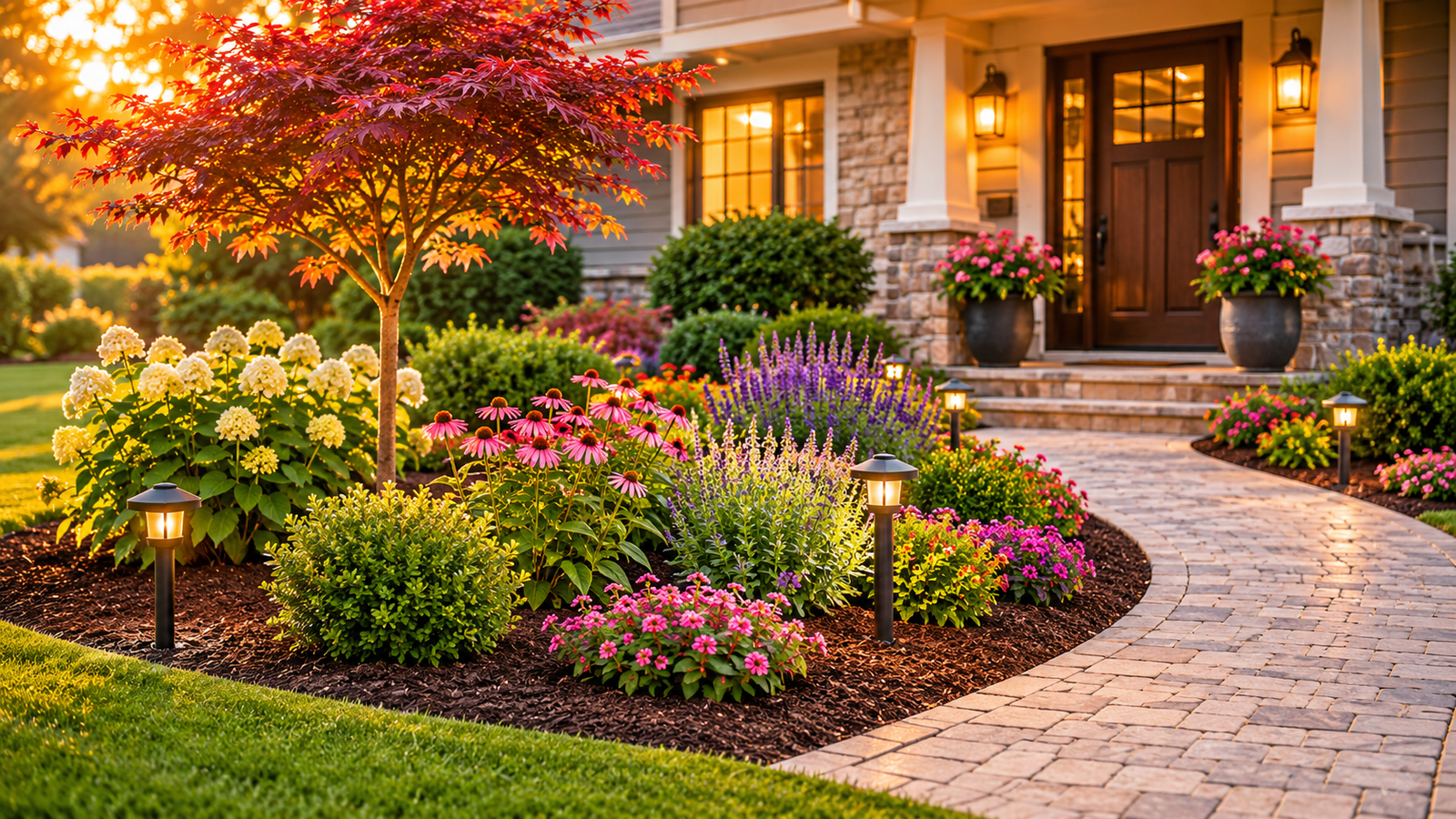
Let’s be honest: scrolling through endless, flawless landscape design pictures online can feel completely overwhelming. The truth is, the best landscaping ideas aren’t about copying a magazine spread. They’re about finding what actually works for your specific space, soil, climate, and, most importantly, how much weekend time you want to spend on upkeep. For most homeowners, a stunning yard doesn’t require a massive budget or a full-scale makeover. It usually comes down to a few strategic moves: defining your bed edges, laying down a fresh layer of mulch, choosing plants that actually fit the spot, creating one clear pathway, and establishing a single, strong focal point.
This guide breaks down practical, actionable landscaping ideas for front gardens, backyards, and tight spaces. We’ll also cover budget-friendly DIY landscaping ideas, low-maintenance strategies, and exactly how to use AI for landscape ideas without falling for unrealistic, computer-generated illusions.
Quick Answer Cheat Sheet: Which Idea Fits Your Yard?
Instead of guessing, here is a quick breakdown of which approach fits your specific situation:
- Front Yard: Curved beds, foundation planting, a clear entry path, and one small ornamental tree. Best for: Curb appeal and guiding guests to the door. Maintenance: Low to medium.
- Backyard: A defined patio or seating zone, privacy shrubs, raised garden beds, and strategic lighting. Best for: Entertaining, playing, or growing your own food. Maintenance: Medium.
- Small Yard/Courtyard: Container gardens, vertical planters, narrow beds, and gravel patios. Best for: Making limited square footage feel organized and spacious. Maintenance: Low to medium.
- Sloped or Dry Yard: Ground covers, drought-tolerant plants, and simple terracing (call a pro for big retaining walls). Best for: Controlling erosion and saving water. Maintenance: Low (once established).
- Shady Yard: Shade-loving perennials, ferns, hostas, and mulch paths. Best for: Softening areas where grass simply refuses to grow. Maintenance: Low to medium.
Front Yard Landscaping Ideas
Your front yard has two main jobs: look inviting from the street and make the walk to your front door completely obvious. Always start with the “bones” (beds, paths, entryway) before you even think about buying plants.
- Go for Curved Planting Beds: A bed with a gentle, sweeping curve instantly looks softer and more organic than a rigid straight line. Plus, it’s much easier to maneuver a lawnmower around. Pro tip: lay out a garden hose to mark your curve, step back to the street to check the sightline, and then cut the edge with a sharp spade. Keep the curves wide and simple; tight, wavy lines just look busy and are a nightmare to mow.
- Smart Foundation Planting: Plant in a band along your house, placing taller shrubs near the corners and under blank walls, while keeping shorter plants under windows. Always choose plants based on their mature height, not how cute they look in a 1-gallon pot. You don’t want to be pruning a monster bush out of your living room window in five years. Leave a little breathing room between the plants and the wall for airflow.
- Define the Entry Path: A straight, direct path to the door almost always looks best. It should be wide enough for two people to walk side-by-side comfortably (about 4 feet is the sweet spot). Whether you choose pavers, stepping stones, or poured concrete, make sure the path slopes slightly away from the house to shed water.
- Feature Plants Near the Entrance: Put your absolute best-looking plants where visitors naturally pause: beside the steps, flanking the door, or right at the start of the path. Choose hardy shrubs sized perfectly for a doorway, not 12-foot giants that will overwhelm the entry.
- Embrace Symmetry (If It Fits): Matching shrubs or planters on both sides of the door are perfect for Colonial, Georgian, or other formal home styles. It’s incredibly easy to plan and looks instantly tidy. Just be prepared for consistent trimming, and if one plant dies, replace it with the exact same variety to keep the balance.
- Modern Minimalist Front Yard: Think fewer plant types, repeated in groups of three or five, paired with clean bed edges, ornamental grasses, and gravel or concrete pavers. Warning: this isn’t “no-maintenance.” Weeds in gravel and fallen leaves still demand your attention to keep that crisp look.
- One Small Ornamental Tree as a Focal Point: A single, well-placed small tree can completely anchor an otherwise plain yard. Pick a species whose mature size actually fits the space, and keep it well away from the house foundation, driveway, and overhead power lines. (And yes, always call 811 before digging).
- Mulch vs. Decorative Gravel: Mulch is king for planted beds because it retains moisture and chokes out weeds. Gravel is better for dry-climate plantings or narrow strips beside the house where you want a cleaner, sharper look. Don’t randomly mix them in one small bed; pick one per zone.
Matching Ideas to House Style: Brick or traditional homes pair beautifully with symmetrical shrubs and classic perennials. Craftsman and cottage homes thrive with looser, layered flower borders. Modern homes demand simple geometry, grasses, and gravel. Ranch homes benefit from long, low, layered beds that visually break up that wide, horizontal facade.
Backyard Landscaping Ideas
The backyard is all about lifestyle. Decide what you actually do outside (eat, play, grow veggies, or just zone out), and design zones around those activities.
- Create an Outdoor Seating Area: A simple patio of pavers, flagstone, or compacted gravel gives you a defined spot to relax. Place it where you’ll actually use it: close to the kitchen door if you love grilling, or tucked in a quiet corner for morning coffee. Always allow enough room for the furniture plus space to push chairs back.
- Purposeful Garden Pathways: A path leading to the shed, garden, or fire pit keeps your lawn and soil from turning into a muddy, worn-out track. Stepping stones set directly into the lawn are the simplest, most charming version of this.
- Patio Edge Planting: Soften those hard, hardscape edges with a planting strip or large containers along the patio. Just make sure to use plants that can tolerate the heat radiating off the paving.
- Raised Garden Beds: Raised beds improve drainage, warm up faster in the spring, and save your back. A standard, easy-to-reach size is 4 feet wide and 8 feet long. (A 4×8 foot bed filled 10 inches deep needs about 26.7 cubic feet of soil, or roughly 1 cubic yard). Stick to untreated wood or materials safe for food gardens.
- Strategic Outdoor Lighting: Solar path lights are the ultimate DIY landscaping idea because they require zero wiring. Low-voltage systems give a much more even, professional glow but require a bit more planning. Leave permanent line-voltage wiring to a licensed electrician.
- Privacy Planting: A row of evergreen shrubs or a mixed hedge can beautifully screen out a neighbor’s view. Space them according to their mature width, not their nursery size. Mixing species is also a smart move, so a single disease doesn’t wipe out your entire privacy screen.
- Rock Gardens or Dry Beds: These work wonderfully in sunny, well-drained spots or on gentle slopes. Pair rocks of varying sizes with low, drought-tolerant plants. Avoid scattering small stones randomly; partly burying large “anchor” stones looks much more natural.
- A Subtle Water Feature: A small recirculating fountain or container water feature adds soothing sound and movement without major excavation. Deep ponds, however, raise serious safety, electrical, and local regulation questions, especially if you have young kids.
- Pergola and Planting Combos: A pergola beautifully defines a seating area and supports climbing vines. Just check local permit rules and ensure the footings can handle wind loads before you build.
- Lawn and Bed Combinations: Keep the lawn as a simple, sweeping shape, and wrap planting beds around it. A smaller, well-shaped lawn is infinitely easier to maintain than a large one with a dozen awkward, hard-to-mow corners.
Rule of thumb: Avoid cramming every single idea into one yard. Pick two or three that match your lifestyle, and leave some open space. Empty areas actually help the planted areas look intentional and breathable.
Small Landscaping Ideas for Limited Spaces
When square footage is tight, scale and restraint matter way more than variety.
- Container Gardens: Pots let you chase the sun, move plants as seasons change, and skip the backbreaking digging. Always use pots with drainage holes, and group them in odd numbers at varying heights for visual interest.
- Vertical Gardens and Wall Planters: Trellises, wall-mounted pockets, and tall obelisks add lush greenery without eating up floor space. Just verify your wall can handle the weight of wet soil.
- Narrow Garden Beds: Even a bed that’s only 18 to 24 inches wide along a fence or wall can successfully hold shrubs, perennials, or herbs. Just keep the plant choices in proportion to the narrow width.
- Compact Pathways: Stepping stones with low ground cover (like creeping thyme) squeezed between them take up far less room than a full-width path, but still beautifully guide the eye.
- Small Ornamental Trees: Always check the mature size before buying. A tree labeled “small” at the nursery can still easily reach 15 to 25 feet. Avoid anything that will quickly outgrow its welcome.
- Compact Gravel Patio Nook: A compacted gravel patio with a simple bistro table can fit snugly into an unused corner. Just edge it properly so the gravel doesn’t migrate into your beds.
- Corner Planting: Corners are often dead space. A tiered planter or a corner bed with a tall center plant and lower plants cascading around it fills the gap gracefully.
Crucial tip: Check your sun hours before choosing plants. A small yard that looks sunny at noon might be completely shaded by fences and neighboring buildings for the rest of the day. Ensure all planters drain away from the house.
Landscaping Ideas on a Budget
The biggest visual improvements are often the cheapest: crisp edges, fresh mulch, and a few well-chosen plants repeated in groups. Retail prices swing wildly by region and season, so always compare local garden centers, municipal compost programs, and community plant sales.
- Define bed edges: (Spade, steel, plastic, or stone edging). DIY Level: High. Why: Instantly makes beds look intentional and cared for.
- Mulch existing beds: (Shredded bark, wood chips, or compost). DIY Level: High. Why: Suppresses weeds and locks in moisture.
- Divide and move plants: (Existing perennials and a spade). DIY Level: High. Why: It’s literally free plants to fill gaps.
- Grow from seed: (Seed packets and starter trays). DIY Level: High. Why: Lowest cost per plant for annuals and some perennials.
- Gravel path: (Gravel, edging, landscape fabric). DIY Level: Medium. Why: Provides a clear route at a fraction of the cost of pavers.
- Reuse containers: (Buckets, crates with drilled drainage). DIY Level: High. Why: Cheap, rustic charm.
- Native or adapted plants: (Local nursery finds). DIY Level: High. Why: They naturally need less water and care once established.
- Phase the project: (Plan by zone). DIY Level: High. Why: Spreads the financial hit over multiple seasons.
Start with the area people see first (usually the front entry). Do one bed perfectly before moving on to the next. Resist the urge to buy a little bit of everything; repeating a few plant types looks more cohesive and costs less to maintain.
Do It Yourself Landscaping Ideas
These projects are highly achievable for most beginners. Just remember: call 811 before any digging, and double-check your HOA and local rules before making major changes.
- Create a simple flower bed: Mark the shape with a hose, remove the grass (cut with a spade or rent a sod cutter), loosen the soil, mix in compost if needed, plant, and mulch. Group plants by their sun and water needs.
- Install basic edging: Cut a clean trench along your marked line, set the edging so the top sits just above the soil, and backfill. Steel, plastic, and stone all work, but stone looks the most premium (and takes the longest to install).
- Build a gravel path: Excavate 3 to 4 inches, compact the base, lay landscape fabric if appropriate, add edging, then pour gravel in layers. Math check: A path 3 feet wide and 20 feet long with 3 inches of gravel is 3 × 20 × 0.25 = 15 cubic feet (about 0.56 cubic yards). At roughly 1.4 tons per cubic yard, that’s about three-quarters of a ton of gravel.
- Apply mulch correctly: (See the section below, as mulch depth is the most common DIY mistake).
- Arrange container plants: Use the classic “thriller, filler, spiller” approach: one tall focal plant, a mid-height filler, and a trailing edge plant. Ensure pots drain and group plants with similar water needs.
- Make a small rock garden: Use a few large stones, partly buried, with gravel or sand-based soil that drains well, paired with low plants suited to dry conditions.
- Install solar lights: Place them where they get several hours of direct, unobstructed sun. Remember, solar lights provide ambient mood lighting, not heavy-duty security lighting.
- Build a simple raised bed: Use untreated lumber or a suitable alternative, level the site, assemble the frame, fill with a quality soil mix, and plant.
- Plant a small privacy screen: Stagger the shrubs in a zig-zag pattern rather than a straight military line, and space them according to their mature width.
When to hire a professional: Retaining walls, significant grading changes, complex drainage systems, major excavation, large tree removal, permanent electrical work, and anything involving gas, water, or sewer lines should always be handled by qualified pros. Walls above a certain height often require permits and engineering.
The “Mulch Math”: How Much Do You Actually Need?
Extension offices generally recommend a layer of 2 to 3 inches for planting beds. To calculate: multiply the bed area (in square feet) by the depth (in feet), then divide by 27 to get cubic yards.
For example, the LSU AgCenter notes that 100 square feet at 3 inches deep takes 25 cubic feet (a little under 1 cubic yard). So, a 10 by 20-foot bed at 3 inches deep needs 200 × 0.25 = 50 cubic feet, which is about 1.85 cubic yards, or roughly 25 standard 2-cubic-foot bags. Bulk mulch settles, and bagged volumes vary, so treat these as estimates and round up slightly.
Crucial rule: Keep mulch pulled back from tree trunks and plant stems, and keep it away from the house foundation. Experts recommend 2 to 3 inches of clearance at the trunk, and 6 to 12 inches from foundations. Piling mulch against a trunk (the dreaded “mulch volcano”) promotes rot and invites pests. Never exceed about 3 to 4 inches of mulch overall.
Low-Maintenance Landscaping Ideas
Let’s be real: “low maintenance” does not mean “no maintenance.” It simply means choosing plants and materials that demand less watering, trimming, and replacing once they get established.
- Native or climate-adapted plants: Low maintenance, often low water needs after establishment. (Just verify the plant suits your specific sun and soil).
- Perennials and shrubs: Low to medium maintenance. Moderate water at first, then lower. They will need occasional pruning and division.
- Ground covers: Low maintenance, water needs vary. (Choose non-invasive species for your specific region).
- Mulched beds: Low maintenance, reduces evaporation. (Needs periodic top-ups as it breaks down).
- Gravel and simple hardscape: Low maintenance, zero water needs. (Weeds and debris will still need occasional removal).
- Reduced lawn area: Low maintenance, lowers overall water use. (Replace grass with plants suited to the specific site).
- Drip irrigation: Low maintenance, highly efficient. (Requires initial setup and seasonal checks).
Always pick plants based on your actual site conditions, not just because they looked pretty in a catalog. A drought-tolerant plant sitting in poor drainage will still fail, and a shade plant baked in full sun will struggle.
Simple Landscape Design Ideas for Homes
You can create a highly pleasing, professional-looking design by sticking to a handful of core principles:
- Balance: Visual weight should feel even, either through perfect symmetry or by balancing different elements of similar visual mass.
- Repetition: Repeat a specific plant, color, or material throughout the yard to create a sense of unity.
- Layering: Place tall plants at the back, medium in the middle, and low at the front, viewed from the angle where people will actually see the bed.
- Focal Point: Give the eye one main destination to rest on: a striking tree, a bench, a large pot, or a feature plant.
- Scale and Proportion: Plants and features should appropriately suit the size of the house and the yard.
- Texture and Color: Mix fine and coarse foliage, and limit your main color palette. Remember, foliage provides color for far longer than fleeting blooms.
- Softscape and Hardscape: Combine living elements (plants, lawn) with hard ones (paths, patios, walls) so the yard functions beautifully year-round.
- Pathway Placement: Paths should go exactly where people already naturally walk; otherwise, they will just cut corners and kill your grass.
How to Use AI for Landscaping Ideas
AI image generators can be fantastic for exploring options quickly, but they should only be used as a supporting step before real, grounded planning.
- Take a clear, well-lit photo of your yard from the exact angle you want to improve.
- Describe the style you want (e.g., modern, cottage, low-maintenance, drought-tolerant) along with practical constraints like “small space” or “limited budget.”
- Generate several versions and compare them: formal versus natural, gravel versus mulch, with or without a lawn.
- Ask the AI for specific plant ideas, and then verify each one.
- Refine the concept with your real-world constraints: sun exposure, actual dimensions, utility lines, and budget.
Reality check: AI outputs are conceptual visuals, not construction plans. They frequently show plants that cannot survive your USDA zone, sizes that completely ignore your actual space, or layouts that disastrously ignore drainage and utilities. Before building anything, verify plant hardiness, sun exposure, soil drainage, measurements, underground utilities, and local HOA rules.
Popular Landscape Design Styles
- Modern: Clean lines, limited color palette, ornamental grasses, hardscape. (Best for contemporary homes, small lots. Needs crisp edges).
- Traditional: Symmetry, clipped hedges, classic perennials. (Best for Colonial, brick, and formal homes. Requires regular pruning).
- Minimalist: Few plant types, lots of open space. (Best for small yards, courtyards. Low maintenance, but shows neglect very quickly).
- Cottage: Dense, mixed flower borders. (Best for older and informal homes. Medium to high maintenance).
- Tropical: Bold foliage, lush look. (Best for warm climates, or containers in cooler zones. Maintenance depends heavily on climate).
- Mediterranean-inspired: Gravel, drought-tolerant plants, terracotta. (Best for sunny, dry sites. Low water once established).
- Japanese-inspired: Stone, moss, restrained plantings, pruned trees. (Best for small or enclosed spaces. Requires careful, skilled pruning).
- Naturalistic: Native plants, informal groupings. (Best for larger or wilder yards. Low to medium maintenance).
- Xeriscape: Water-efficient planting and design. (Best for dry regions, water-limited yards. Low water, but needs solid initial planning).
How to Choose the Right Landscaping Design for Your Yard
Check these boxes before you spend a single dime:
- USDA Hardiness Zone: The 2023 USDA Plant Hardiness Zone Map shifted roughly half the country to a warmer half-zone compared to 2012. Recheck your zone. Hardiness isn’t everything; heat, rainfall, humidity, and soil matter just as much.
- Sun and Shade: Track exactly how many hours of direct sun each area gets throughout the day.
- Soil and Drainage: Dig a test hole, fill it with water, and see how fast it drains. Your local cooperative extension office can often advise on affordable soil testing.
- Grading Near the House: The International Residential Code requires the grade to fall at least 6 inches within the first 10 feet from the foundation. Impervious surfaces within 10 feet should slope at least 2 percent away. Never build beds or patios that send water toward your house.
- Space and Mature Plant Size: Always read the tag for mature height and spread, not the current size.
- Water and Maintenance: Be brutally honest with yourself about how much time and water you will actually give the yard.
- Safety: Consider pets and small children when choosing toxic plants, water features, and fencing.
- Rules and Utilities: Check HOA rules and permit requirements. Call 811 at least a few business days before digging. Even small projects like planting trees or installing fence posts can hit buried lines.
A design that looks gorgeous in a photo may completely fail in your yard because of a different microclimate, shade pattern, or soil type.
Common Landscaping Mistakes to Avoid
- Planting for today’s size: Small shrubs and trees grow rapidly. Space them for their mature size.
- Mulch volcanoes and too-deep mulch: Keep mulch off trunks and stems, and keep the layer to a few inches max.
- Ignoring drainage: Beds and hardscape that slope toward the house will inevitably cause moisture and foundation problems.
- Too many plant types: Repeat fewer varieties for a calmer, more professional look.
- Skipping utility checks: Call 811 before you dig. Every time.
- Doing everything at once: Phasing the work lets you learn what actually works in your yard and spreads the cost over time.
- Copying a photo from a different climate: Choose plants that naturally suit your specific region.
- Underestimating maintenance: Choose a design you can realistically keep up with.
Frequently Asked Questions (People Also Ask)
What are some good landscaping ideas?
Curved planting beds, mulched borders, a clear entry path, a small ornamental tree, layered shrubs, and container gardens are highly reliable starting points for almost any home.
Can you give me some examples of residential landscapes?
Common, successful examples include a modern gravel-and-grass front yard, a cottage-style flower border, a backyard patio screened with privacy shrubs, a raised-bed vegetable garden, and a drought-tolerant xeriscape.
What are some concept ideas for landscape design?
Focus on creating distinct “outdoor rooms” (like a dining zone or a reading nook), using repetition to tie the yard together, and establishing a strong focal point to draw the eye.
What are simple landscaping ideas for beginners?
Define a bed edge, add a fresh layer of mulch, plant a few perennials or shrubs in repeated groups, and add one container or focal point. Start with just one small area.
How can I landscape my yard on a budget?
Focus heavily on crisp edging, mulch, dividing existing plants, growing from seed, and phasing the project over multiple seasons.
What are the best landscaping ideas for a small yard?
Container gardens, vertical planters, narrow beds, a compact seating nook, and a single small tree specifically sized for tight spaces.
What are low-maintenance landscaping options?
Climate-adapted native plants, heavily mulched beds, ground covers, reduced lawn areas, and drip irrigation. (Note: they still require some seasonal care).
How to use AI for landscape ideas effectively?
Use AI for visual inspiration and comparing broad styles. However, it cannot confirm that plants suit your specific USDA zone, that your drainage will work, or that dimensions are accurate. Always verify with local experts before building.
Conclusion
Great landscaping starts with your actual site, not a Pinterest photo. Check your sun, soil, drainage, and hardiness zone first. Then, choose a few ideas that genuinely fit your space and the level of upkeep you can manage. Start with crisp edges, fresh mulch, and one strong focal point. Add plants in repeated groups, and always call 811 before you dig. Build in phases, and don’t hesitate to bring in a professional for retaining walls, major grading, drainage issues, or electrical work. Your yard will thank you.